Cutter Guide
Cigar Cutters: Types and How to Cut a Cigar
A cigar cutter removes a small part of the cap so the cigar can draw; a sharp double-blade guillotine is the most versatile, while punches and V-cutters give a more concentrated draw.
Updated · Men Cigar Accessories Editorial Team
Next: How to Light a Cigar →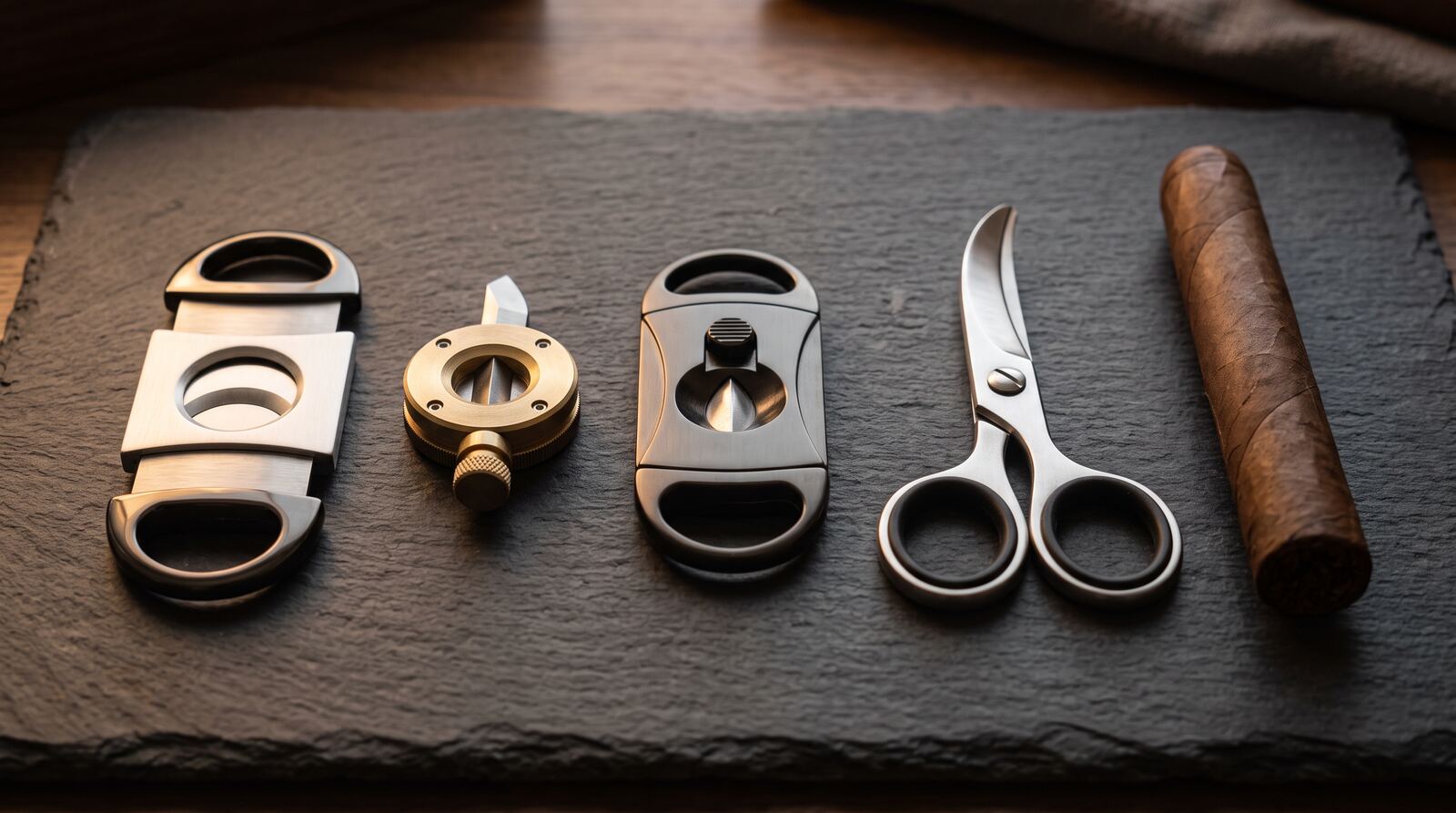
A handmade cigar is closed at the head by a cap, a small piece of wrapper leaf. A cigar cutter opens it. Cut too little and the cigar is hard to draw; cut too much and the wrapper can unravel. The right cutter and a confident technique make the difference.
Types of Cigar Cutters
| Cutter | Cut | Pros | Cons |
|---|---|---|---|
| Single-blade guillotine | Straight | Simple, inexpensive | Can pinch or tear if dull |
| Double-blade guillotine | Straight | Cleanest straight cut; works on most sizes | Very large ring gauges may not fit |
| Punch | Round hole | Compact, keeps the cap intact, concentrated draw | Not suitable for pointed (torpedo) heads |
| V-cutter | Wedge notch | Deep opening with less risk of unraveling | Can concentrate tar on the notch |
| Cigar scissors | Straight | Precise control; traditional | Takes practice; usually pricier |
Quick answer: For most smokers, a sharp stainless double-blade guillotine cutter is the best all-round choice. A punch is a handy second cutter for a tighter, more concentrated draw.
How to Cut a Cigar
- Find the cap line. Look at the head of the cigar for the faint line where the cap meets the wrapper.
- Cut above the line. Aim to remove about 1/16 to 1/8 inch — staying above the cap line keeps the wrapper from unraveling.
- Cut quickly and firmly. With a guillotine, position the cigar, then close the blades in one swift motion. Slow cuts crush the cap.
- Check the draw. Take a cold draw. If it's tight, take another very thin slice.
For a punch, press it into the center of the cap, twist gently and pull it out. For pointed heads like torpedoes and belicosos, use a guillotine and cut a little lower on the taper, where the diameter gives a comfortable draw.
Choosing a Cutter
- Blade material: Stainless steel holds an edge and resists rust.
- Ring gauge capacity: If you smoke thick cigars (60 ring gauge and up), check the cutter's maximum size.
- Action: Smooth, firm opening and closing with no wobble.
- Portability: Punches and slim guillotines suit pockets and key rings.
Even an excellent cutter dulls over time. A blade that starts to crush or tear the cap should be replaced or sharpened.
Cutter Size and Cigar Size
Small-gauge cigars such as panetelas and cigarillos need a cutter that closes fully, while big gordos need a wide opening. See the full cigar size chart on our sister site. A quality cutter is also one of the most useful cigar gifts.
Caring for Your Cutter
Wipe the blades occasionally with a dry cloth or a little rubbing alcohol to remove tobacco residue, which builds up and makes blades stick. Keep the cutter in a pocket or pouch away from keys that can nick the edge, and avoid dropping it, since misaligned blades crush caps instead of slicing them.
Biting the Cap?
Biting off the cap is a movie cliché, not a good technique. It tears the wrapper unevenly and leaves loose tobacco in your mouth. Any sharp cutter does the job better. After cutting, see our guide to lighting a cigar.
Frequently Asked Questions
What is the best type of cigar cutter?
A sharp stainless double-blade guillotine cutter is the most versatile and gives the cleanest straight cut on most cigars.
How much of a cigar should you cut?
Cut about 1/16 to 1/8 inch, staying above the cap line so the wrapper doesn't unravel.
What is a cigar punch?
A cigar punch cuts a small round hole in the cap, keeping most of the cap intact and giving a more concentrated draw.
What does a V-cutter do?
A V-cutter cuts a wedge-shaped notch into the cap, giving a deep opening with less risk of the wrapper unraveling.
Can you use a punch on a torpedo cigar?
Not usually. Pointed heads like torpedoes and belicosos are best cut with a guillotine.